

Trimmer lines for brushcutters and grass trimmers – how to choose the right one? Complete guide
Trimmer line is the primary working component of petrol brushcutters, cordless strimmers and electric grass trimmers. The line type directly governs cutting performance, operating pace and trimmer head longevity. Many line varieties exist, differing in diameter, cross-section, material and application. In this guide, we advise how to select the right trimmer line and which solution...
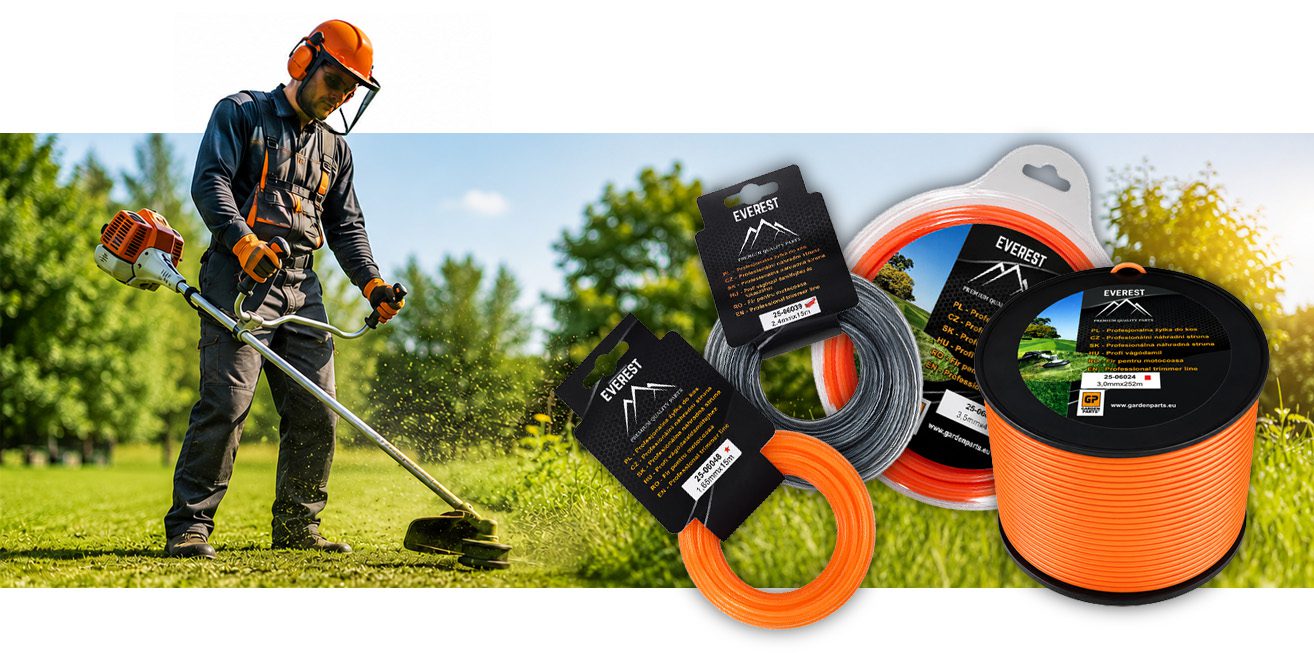
Trimmer line is the primary working component of petrol brushcutters, cordless strimmers and electric grass trimmers. The line type directly governs cutting performance, operating pace and trimmer head longevity. Many line varieties exist, differing in diameter, cross-section, material and application. In this guide, we advise how to select the right trimmer line and which solution works best in specific conditions.
Does every line fit every brushcutter?
No. While most trimmer lines can fit into various cutting heads, you must heed the recommended diameter and machine rating. Overly thick line may bind in the eyelets, while excessively thin line will fray rapidly and struggle in dense vegetation.
Before purchasing, check the information in your user manual or on the trimmer head casing.
How to select a trimmer line?
When choosing trimmer line, consider several foundational criteria.
1. Trimmer line diameter
Diameter exerts the biggest impact on cutting performance and equipment workload.
The most common sizes are:
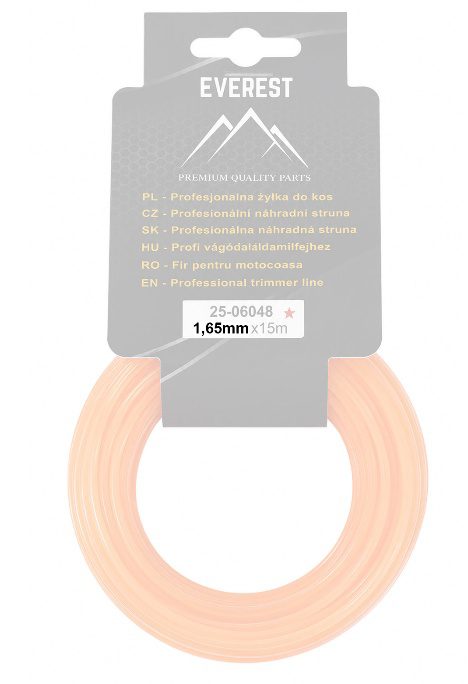
- 1.3–1.6 mm – for lightweight electric and cordless grass trimmers, intended for tender lawn grass.
- 2.0–2.4 mm – universal trimmer lines for most domestic strimmers and brushcutters.
- 2.7–3.0 mm – for more powerful petrol brushcutters, dense grass and weeds.
- 3.3–4.0 mm – for professional brushcutters used in intensive clearance, tall grass and heavy scrub.
The thicker the line, the greater its wear resistance, but the higher the power demands on the machine.
2. Line profile shape
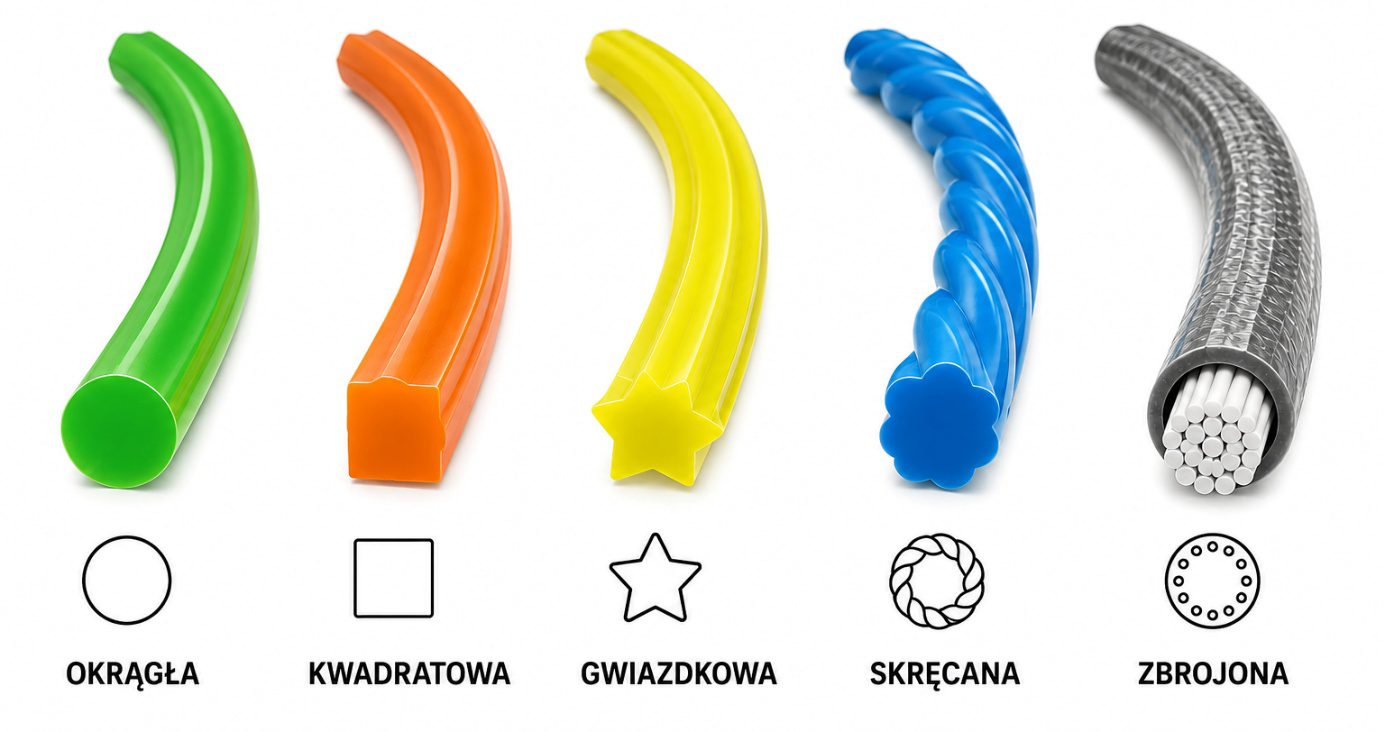
Cross-sectional profile impacts cutting behaviour and line longevity.
Round trimmer line
This is the most popular and versatile line profile.
Its advantages:
- high resistance to abrasive wear,
- quiet running,
- good durability,
- smooth feed from the trimmer head.
Recommended for routine lawn mowing and garden maintenance.
Square trimmer line
Sharp edges shear through tall grass and woody weeds far more cleanly.
Best suited for:
- dense grass,
- dry tough weeds,
- overgrown neglected plots.
It wears down somewhat faster than round line.
Star profile trimmer line
Featuring sharp cutting edges, it produces a very clean cut.
Recommended for:
- lawn care and edging,
- tender young grass,
Twisted line (spiral)
Its aerodynamically twisted spiral form reduces drag.
Advantages:
- quieter operation,
- reduced vibration,
- lower fuel or battery energy draw,
- steady efficiency during sustained clearing operations.
This is a frequent choice of commercial groundskeepers.
Reinforced trimmer line
Manufactured from resilient polymer blends or co-extruded with a reinforced inner core.
Excels during:
- intensive clearance work,
- eradicating tough weeds,
- working around stony surfaces.
It features superior resistance to snapping and fraying.
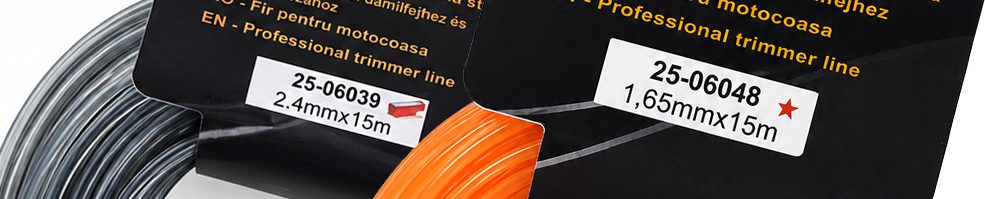
Information identifying trimmer line profile on Everest packaging is indicated by a red icon positioned beside the catalogue number:
Which trimmer line for which vegetation?
Matching the line to the job ensures optimal results.
|
Vegetation type |
Recommended line |
|---|---|
|
Tender young grass |
Round or star 1.3–2.0 mm |
|
Regularly mowed lawn |
Round 2.0–2.4 mm |
|
Dense grass |
Square 2.4–3.0 mm |
|
Weeds |
Square or twisted 2.7–3.3 mm |
|
Nettles and burdock |
Square or reinforced |
|
Tall grass |
Twisted or square |
|
Overgrowth and rough terrain |
Reinforced 3.0–4.0 mm (if permitted by the machine manufacturer) |
Trimmer line material composition
Most trimmer lines are manufactured from premium nylon (polyamide), distinguished by superior elasticity and wear resistance.
Premium lines frequently feature:
- enhanced resistance to heat weld,
- plasticiser additives enhancing flex life,
- reinforced core,
- special coatings reducing frictional wear.
Consequently, they operate longer between spool replacements.
When to replace the trimmer line?
The trimmer line should be replaced when:
- the spool reservoir is exhausted,
- it turns brittle and snaps repeatedly,
- it feeds unevenly from the head,
- cutting effectiveness declines significantly.
Prompt replenishment ensures smooth machine operation and protects the cutting head from damage.
How to store trimmer line?
To preserve its properties over time:
- store it in a cool, shaded environment,
- avoid extended exposure to direct sunlight,
- protect from excessive heat,
- avoid leaving it for months in hot, unventilated spaces.
Some manufacturers recommend periodically soaking trimmer line in water for 12 to 24 hours prior to use. This restores moisture to the polyamide nylon, significantly reducing brittleness and snapping under load.
Common trimmer line mistakes
The most common mistakes are:
- fitting overly thick line on a low-powered strimmer,
- selecting line that is too thin for tall, tangled grass,
- using damaged or aged, brittle line,
- winding the line incorrectly onto the spool,
- using a diameter outside the manufacturer's specification.
Summary
Correctly selected trimmer line significantly enhances operator comfort, brushcutter durability and mowing productivity. When selecting, focus primarily on diameter, cross-section and intended vegetation. For routine lawn maintenance, round or star line is ideal, whereas for heavy grass and thick weeds, square, twisted or reinforced lines are superior. Adhering to manufacturer guidelines and selecting line with the right specifications protects the trimmer head and delivers efficient cutting throughout the season.