


Saw chains – how to choose the right chain for your chainsaw? Complete guide
The saw chain is one of the most critical components of any petrol, electric and cordless chainsaw. It determines cutting efficiency, working speed and user safety. Selecting the right model is not always straightforward – they differ in pitch, drive link gauge, length and cutter type. In this guide, we explain how to choose a saw chain for...
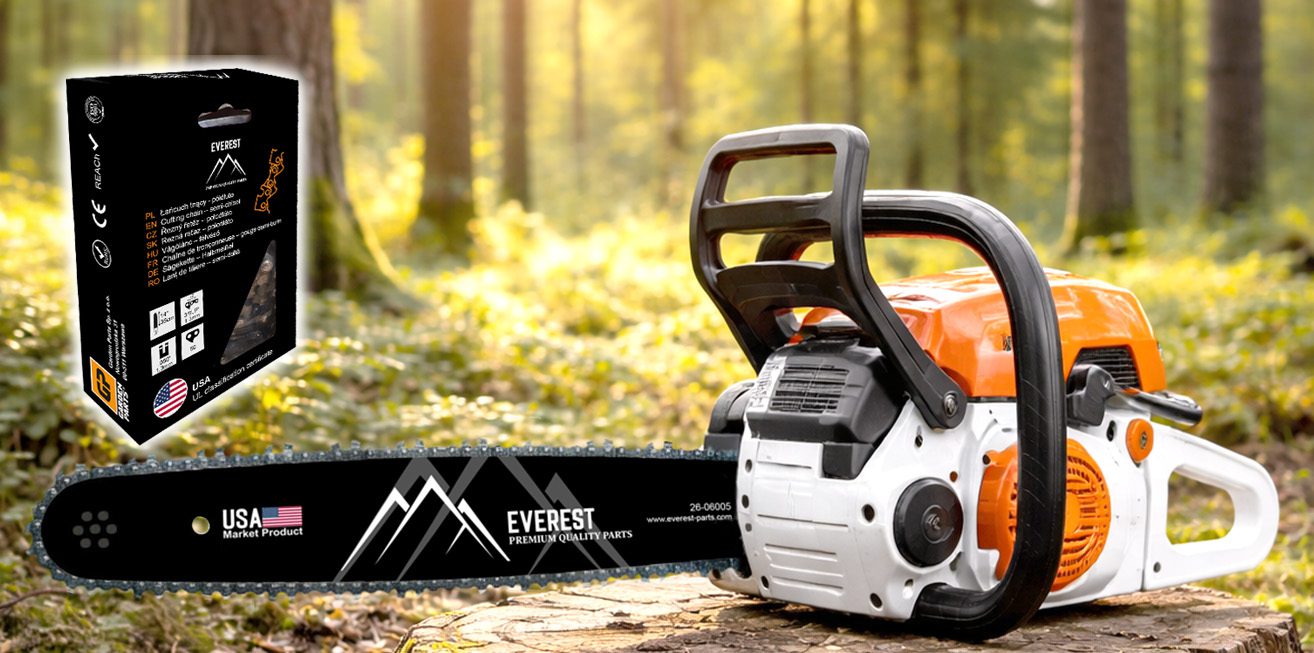
The saw chain is one of the most critical components of any petrol, electric and cordless chainsaw. It determines cutting efficiency, working speed and operator safety. Selecting the correct model is not always straightforward – they differ in pitch, drive link gauge, length and cutter type. In this guide, we explain how to choose a saw chain for your chainsaw and which parameters require close attention.
Are all saw chains universal?
No. Saw chains are not universal and must be matched precisely to both the guide bar and the powerhead. An ill-fitting chain causes cutting problems, premature bar wear and raises the risk of pinching or snapping during cut.
Before buying a new chain, consult the stamped markings on your guide bar, machine manual or chainsaw rating plate.
How to choose a saw chain?
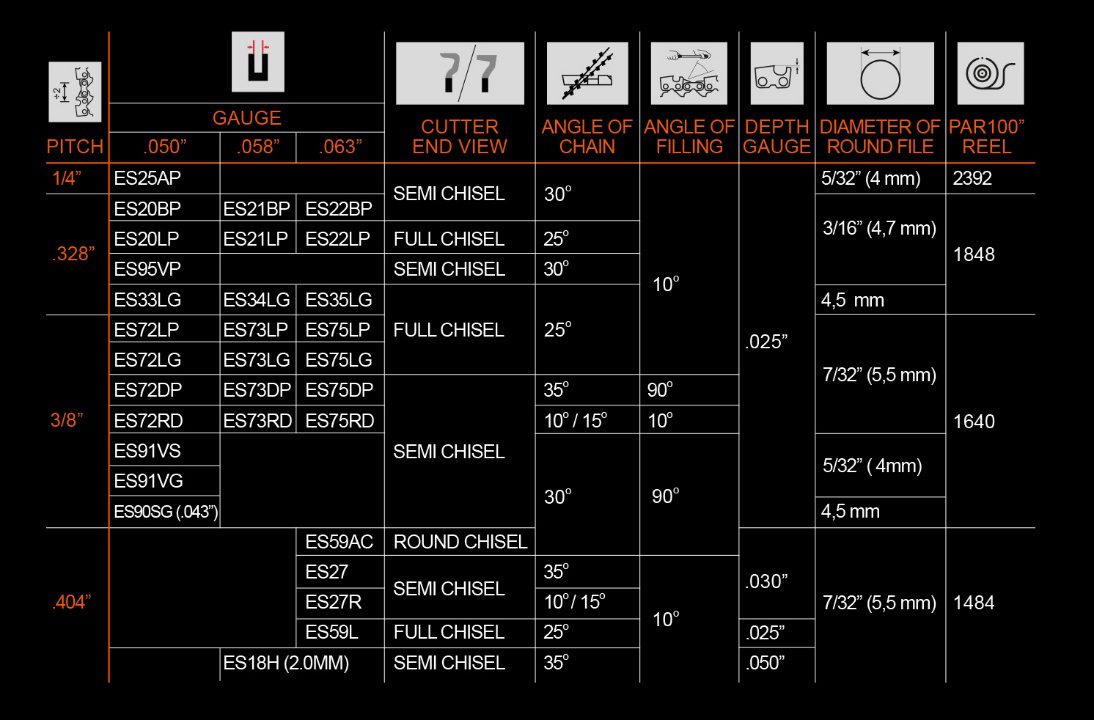
When choosing a new chain, pay close attention to several foundational parameters.
1. Chain pitch
Pitch defines the size of links and cutters. It is a critical parameter that must correspond with the drive sprocket and guide bar nose.
The most common chain pitches are:
- 1/4″ – for lightweight and tree care chainsaws,
- .325″ – popular on domestic and semi-professional saws,
- 3/8″ Low Profile (LP) – used on many electric and cordless chainsaws,
- 3/8″ – designed for larger, higher-powered saws,
- .404″ – deployed primarily on heavy-duty professional forestry saws.
2. Drive link gauge
The drive link travels inside the bar groove, so its gauge must be an exact match.
The most common gauges are:
- 1.1 mm (0.043″),
- 1.3 mm (0.050″),
- 1.5 mm (0.058″),
- 1.6 mm (0.063″).
An oversized link will bind in the bar groove, while an undersized link will wobble excessively, compromising cut straightness and safety.
3. Number of drive links
This parameter determines chain loop length. The drive link count must match the guide bar and sprocket specifications.
For example, two chains for the same bar length may have different drive link counts, so always follow the manufacturer specification.
4. Guide bar length
The chain must be matched to the designated guide bar length. However, bar length alone is insufficient – pitch and drive link count are equally vital.
Types of saw chains
Semi-chisel profile chain
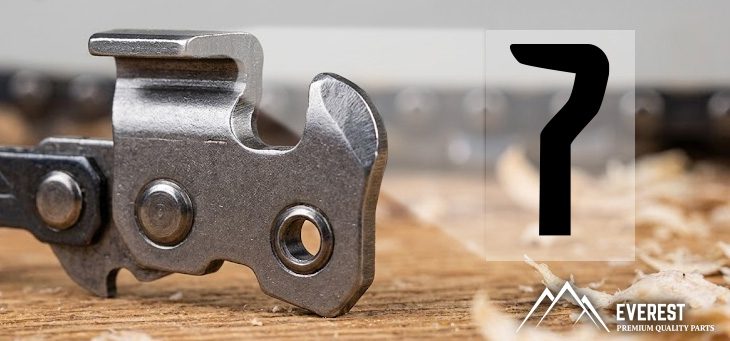
These are the most popular choices for domestic use.
Their advantages include:
- higher resistance to dirty wood,
- longer working life,
- easier filing and sharpening,
- smooth cutting action.
They are ideal for cutting firewood and tackling jobs around the property and garden.
Full chisel chain
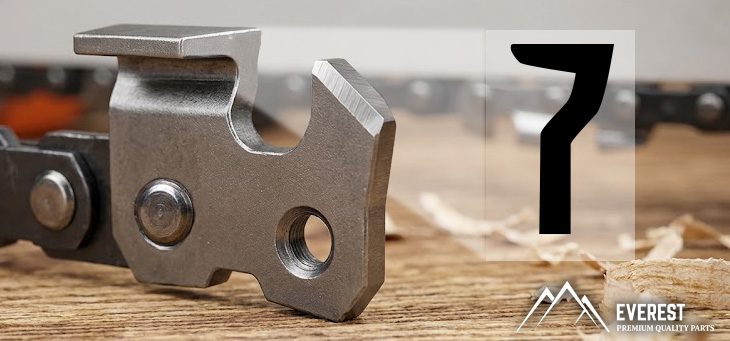
They are distinguished by sharp, cornered cutting edges that deliver exceptional cutting speeds.
They are intended primarily for professional loggers working with clean timber. However, they require more frequent sharpening and are sensitive to sand or soil contamination.
Low Profile
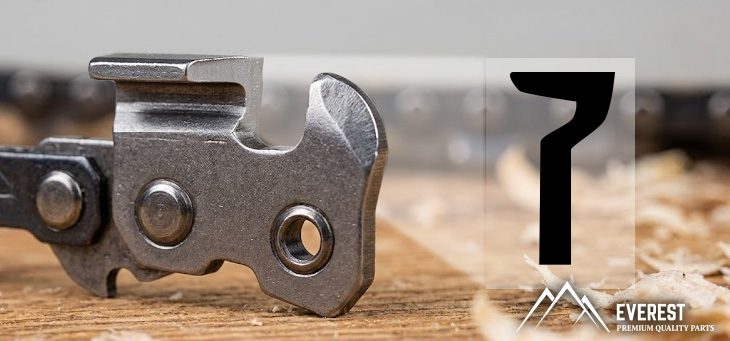
They feature a reduced cutter profile and ramped depth gauges to limit kickback.
They are predominantly used on consumer chainsaws, providing enhanced operating comfort and safety.
When should a saw chain be replaced?
A saw chain must be replaced when:
- it can no longer be effectively sharpened,
- cutters are filed down to the wear indicator line,
- links are cracked or physically damaged,
- the chain repeatedly slips off the bar despite correct tensioning,
- signs of excessive rivet wear or elongation appear.
A damaged chain should never be operated, as it could snap under load during cutting.
Which cutter profile for which timber type?
The cutter profile strongly influences cutting speed, chain longevity and operator comfort. Choosing the right chisel type should match the timber species and chainsaw operating conditions.
Full Chisel chain
Full chisel chains feature square-cornered, razor-sharp cutters. They offer unmatched cutting speed and performance, making them the preferred choice for professional loggers and forestry companies.
They excel during cutting:
- hardwood such as oak, beech, ash or hornbeam,
- heavy trunks and logs,
- fresh, clean timber free of dirt and grit.
Bear in mind, however, that full chisel rapidly loses its edge when touching sand, dirt or grit-embedded bark. It demands more frequent sharpening and seasoned operator handling.
Semi-chisel saw chain (Semi Chisel)
Semi-chisel teeth have rounded working corners, making them more forgiving against dulling and easier to file by hand. This is the most versatile chain profile.
Recommended for:
- coniferous softwood, e.g. pine, spruce, fir or larch,
- medium-density hardwood, e.g. birch, alder or poplar,
- lightly soiled timber,
- cutting firewood,
- domestic and estate chores.
While cutting slightly slower than full chisel, it retains its sharpness longer and copes better in challenging conditions.
Low Profile chain
Low-profile chains feature smaller tooth height and kickback-reducing bumper drive links. They deliver smoother handling and improved operator safety.
They perform best when:
- limbing branches,
- tree maintenance,
- cutting modest quantities of firewood,
- garden chores,
- cutting softwoods such as pine, spruce or lime.
This is the premier choice for domestic operators and occasional chainsaw users.
Which chain for which wood? – quick comparison
|
Timber type |
Recommended chain type |
|
Pine, spruce, fir |
Semi-chisel or Low Profile |
|
Birch, alder, poplar |
Semi-chisel |
|
Oak, beech, ash |
Full chisel |
|
Hornbeam, black locust |
Full chisel |
|
Mixed firewood |
Semi-chisel |
|
Timber soiled with sand |
Semi-chisel |
|
Professional forestry logging |
Full chisel |
|
Garden maintenance and tree pruning |
Low Profile |
Tip
If the chainsaw is used mainly for work around the home, the best choice is a semi-chisel saw chain (Semi Chisel). It combines good cutting performance with high durability and stays sharper for longer. On the other hand, full chisel (Full Chisel) is worth choosing when maximum cutting speed in clean, hard timber is required and the operator is experienced with chainsaws.
How to care for a saw chain?
To maximise chain life, keep these rules in mind:
- regularly check chain tension,
- using the correct bar and chain lubricating oil,
- cleaning sawdust from the guide bar groove,
- avoiding chain contact with soil, stones and metal,
- sharpen the cutters at the first sign of dulling.
Proper maintenance significantly extends the working life of both the chain and guide bar.
Most common chain selection mistakes
The most frequent mistakes include:
- selecting the wrong pitch,
- buying a chain with an incorrect drive link count,
- mismatched drive link gauge to the guide bar,
- installing the chain backwards,
- overly tight or excessively loose chain tension.
Avoiding these errors translates directly to higher cutting efficiency and operator safety.
Summary
Selecting the right saw chain is critical for chainsaw cutting efficiency and operator safety. Before purchasing, verify pitch, drive link gauge, link count and guide bar length. It is also important to match cutter profile to the task – semi-chisel is ideal for domestic duties, while full chisel is the premier choice for intensive professional logging. Regular filing, proper lubrication and correct chain tension will keep your chainsaw performing at its peak for years to come.